Istanbul has one of the largest public transport networks in Europe: metro lines on both continents, trams through the old city, a rail tunnel under the Bosphorus and the ferries that locals treat as part of daily life. It is cheap, mostly clean and easy to use once you have the right card. This guide covers how to pay, what it costs as of October 2026, and which lines you are actually likely to use as a visitor.
The Istanbulkart: how to pay
Almost everything, from the metro, trams, buses and funiculars to the Şehir Hatları ferries and the Marmaray, is paid with the Istanbulkart, a contactless card you tap on the turnstile or the reader by the bus driver. There are no paper tickets on most routes.
- Price: the standard anonymous card costs ₺165, according to the official Istanbulkart site (as of October 2026). That buys the card only; you then load credit on it. The card fee is not refundable.
- Where to buy: from the ticket and top-up machines at metro and Marmaray stations, ferry piers and the airport metro stations, and at kiosks displaying the Istanbulkart logo. Machines take Turkish lira notes, and many also accept bank cards.
- Topping up: at the same machines, at kiosks, or in the official İstanbulkart mobile app, which also shows your balance.
- Sharing: one anonymous card can be used by several people travelling together. Tap once for each person and pass it back. Wikipedia and most visitor guides put the limit at five people. Only the first tap gets the transfer discount described below.
If you only need a ride or two, the machines also sell single-use electronic tickets. They cost more per ride than the card, so for a stay of more than a day the Istanbulkart quickly pays for itself. Contactless bank cards are accepted at some gates and on many buses, but acceptance varies by line, card payments are charged at a higher rate and they do not get transfer discounts. Treat a bank card as a backup, not your main way to pay.
Fares as of October 2026
The current tariff took effect on 20 July 2026, after the city council approved a 10% increase. The standard fare covers one ride on the metro, tram, bus or funicular. The metrobüs and the Marmaray charge by distance, and ferries have their own prices per route.
| Ride or product | Full fare (TRY) |
|---|---|
| Istanbulkart card (anonymous) | ₺165 (card only, no credit) |
| Metro, tram, bus, funicular – one ride with Istanbulkart | ₺46.20 |
| Single-use ticket, 1 ride | ₺65 |
| Single-use ticket, 2 / 3 / 5 / 10 rides | ₺120 / ₺185 / ₺275 / ₺530 |
| Metrobüs (by distance) | ₺33.08 (one stop) to ₺68.59 (longest) |
| Marmaray (by distance) | ₺37.40 (1–3 stations) to ₺82.17 (36–43 stations) |
| Ferry Kadıköy–Karaköy, Kadıköy–Eminönü, Kadıköy–Beşiktaş | ₺65.21 |
| Ferry Üsküdar–Eminönü | ₺58.52 |
| Golden Horn (Haliç) ferry lines | ₺76.90 |
| Ferry to the Princes' Islands | ₺151.23 |
Transfers: if you change to another vehicle within the transfer window, each further ride costs less than the full fare. The discounts shrink with each change. We could not confirm the exact transfer amounts in the July 2026 tariff, so we have left them out.
Distance fares: on the Marmaray, the maximum fare is taken when you tap in and the difference is refunded when you tap your card on the exit validators. If you walk out without tapping, you pay the full distance. The metrobüs is also charged by distance.
The airport metro (M11) is also charged by distance. Fares quoted online for Istanbul Airport to Gayrettepe disagree, and we could not find the figure on an official page, so check the price on the machine at the station.
Arriving with suitcases? A fixed-price car takes you from arrivals to your hotel door.
The lines visitors actually use
| Line | Route | Useful for |
|---|---|---|
| T1 tram | Kabataş – Karaköy – Eminönü – Sultanahmet – Beyazıt – Bağcılar | The old city: Hagia Sophia, Blue Mosque, Grand Bazaar, Spice Bazaar |
| F1 funicular | Kabataş – Taksim | Linking the T1 tram and the Bosphorus shore with Taksim in a few minutes |
| M2 metro | Yenikapı – Şişhane – Taksim – Osmanbey – Levent – Hacıosman | Galata, Taksim, Nişantaşı; crosses the Golden Horn on the metro bridge |
| M11 metro | Gayrettepe – Kağıthane – Istanbul Airport – Halkalı | Istanbul Airport; change to the M2 at Gayrettepe |
| Marmaray | Halkalı – Sirkeci – Üsküdar – Ayrılık Çeşmesi – Gebze | Crossing to the Asian side under the Bosphorus |
| M4 metro | Kadıköy – Ayrılık Çeşmesi – Sabiha Gökçen Airport | Sabiha Gökçen Airport and Kadıköy |
| T5 tram | Eminönü – Fener – Balat – Eyüpsultan – Alibeyköy | Balat, Fener and the Eyüp cable car |
| F2 Tünel | Karaköy – Tünel (Beyoğlu) | A short historic underground funicular from Karaköy up to the start of İstiklal |
| Ferries | Eminönü, Karaköy, Kabataş, Beşiktaş ↔ Kadıköy, Üsküdar; Golden Horn; Bosphorus | Crossing between continents, and the best views in the city |
Most first-time visitors get by with three things: the T1 tram in the old city, the F1 funicular and M2 metro for Taksim and Galata, and the ferries to the Asian side. Our guides to Kadıköy and Moda and Balat and Fener explain those trips step by step.
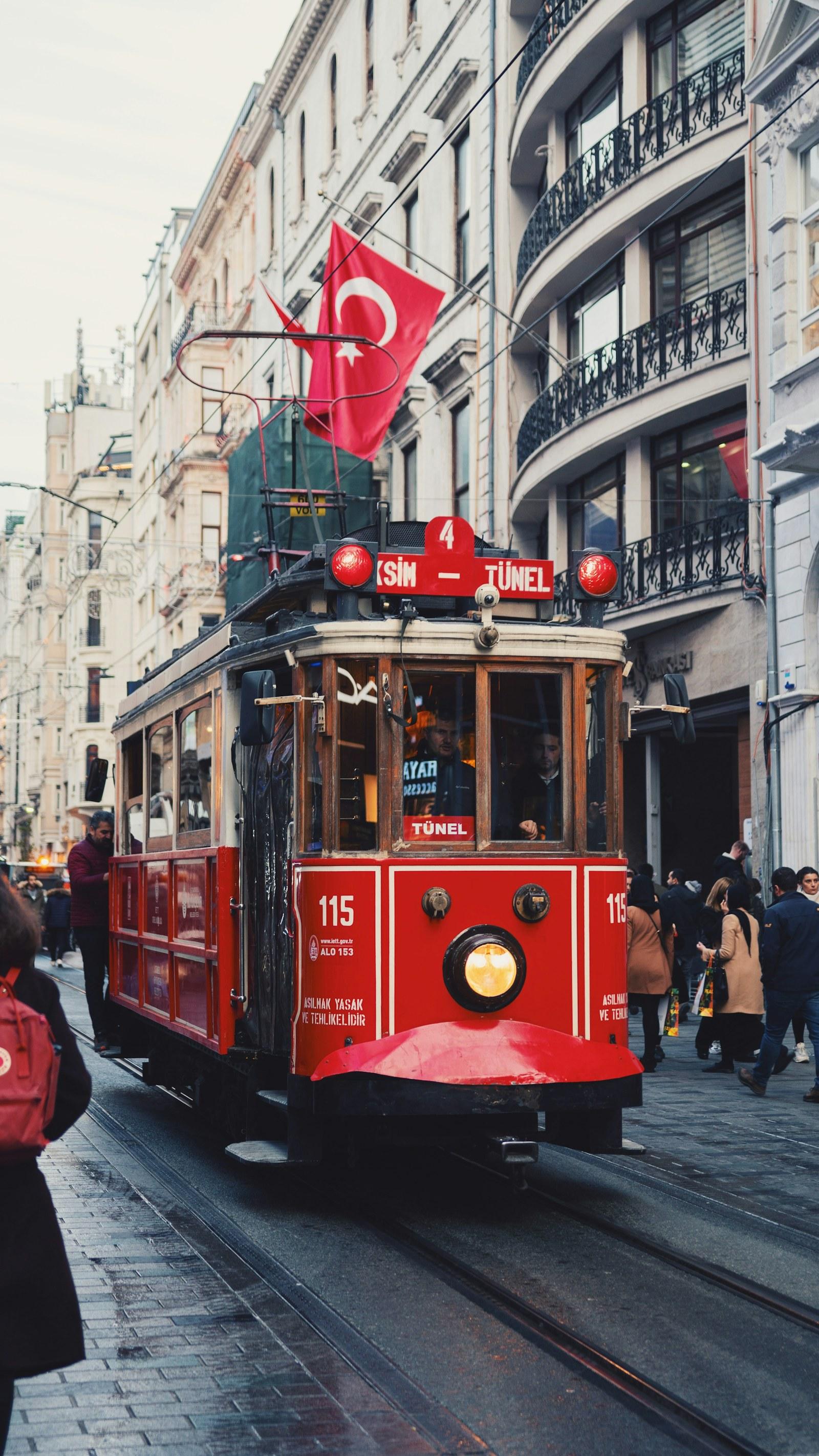
The red nostalgic tram on İstiklal Avenue is a sight rather than a practical way to travel, and the city is replacing it with battery trams. Service has been interrupted at times, so do not count on it. See our İstiklal Avenue and Taksim guide for the walk instead. The small T3 heritage tram in Kadıköy and Moda has been suspended since 19 October 2026 for track renewal, with a reopening planned for early 2027.
Ferries: the best ride in the city
The public ferries of Şehir Hatları are paid with the same Istanbulkart, and the crossing from Karaköy or Eminönü to Kadıköy takes about 20 minutes. On the current timetable, boats on the Kadıköy–Karaköy–Eminönü line run roughly every 20 minutes from early morning until after midnight. Private operators such as Turyol and Dentur Avrasya run similar crossings from neighbouring piers, and they also accept the Istanbulkart.
Sit outside on the upper deck if you can, and buy a tea from the attendant. For a longer trip on the water, see our Bosphorus cruise guide and the Princes' Islands day trip.
Hours and night service
- Metro and trams: roughly 06:00 to midnight on weekdays.
- Night metro: on Friday and Saturday nights and the nights before public holidays, several metro lines run through the night about every 20 minutes. Lines are added and removed from time to time, so check Metro İstanbul before relying on it.
- Marmaray: from about 06:00 to 23:00, with a few later trains; check TCDD Taşımacılık for the current timetable.
- Ferries: each line has its own timetable. Busy crossings such as Kadıköy–Karaköy run until after midnight, while the Golden Horn and Bosphorus lines finish in the evening.
Times change around religious holidays and New Year, when the city also sometimes makes transport free. Check the operator's site or app on the day.
Apps and practical tips
- Google Maps handles Istanbul's metro, tram, bus and ferry routes well. Moovit is a good alternative. The İstanbulkart app shows your balance and lets you top up.
- Avoid rush hour (roughly 07:00–09:30 and 17:00–20:00) on the metrobüs, the M2 and the T1, when carriages are packed.
- Keep your bag in front of you in crowded carriages and on the tram through Sultanahmet. Our Istanbul safety guide covers the common tricks.
- Offer your seat to older passengers, pregnant women and parents with small children; it is expected.
- Stairs and escalators: many stations are deep, and lifts are not always where you need them. That matters if you have large suitcases.
From the airports by public transport
From Istanbul Airport (IST), the M11 metro goes to Gayrettepe, where you change to the M2 for Taksim or Şişhane. Havaist airport buses run to Taksim, Sultanahmet and other districts; check the current fare on hava.ist. From Sabiha Gökçen (SAW), the M4 metro runs straight to Kadıköy. Our Istanbul Airport to Sultanahmet guide, Istanbul Airport to Taksim guide and Sabiha Gökçen to city centre guide compare all the options.
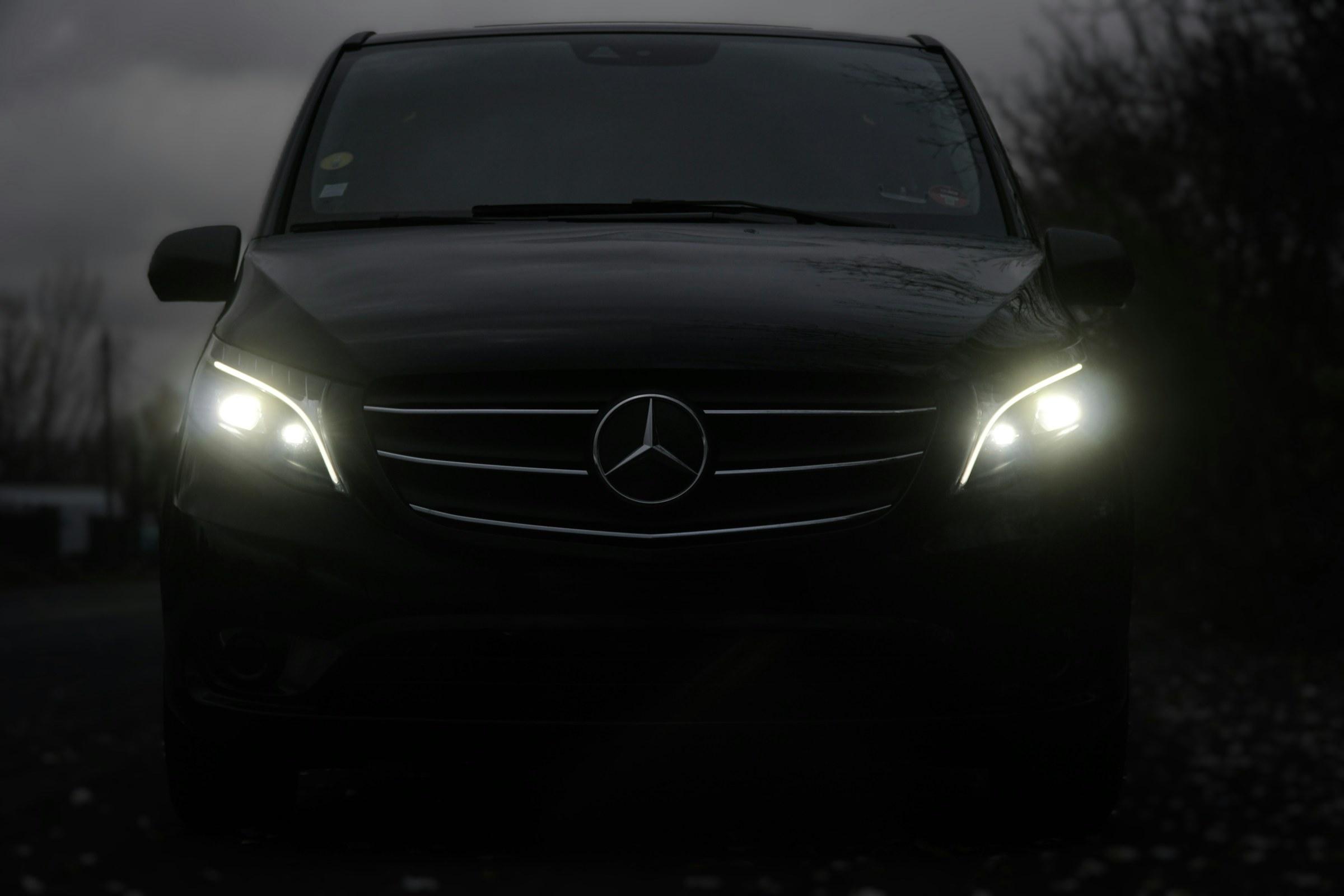
Public transport works well once you are settled in. The first trip, with suitcases, after a long flight, and often with two or three changes, is where most visitors struggle. A fixed-price private transfer from Istanbul Airport to Sultanahmet is $70 in a Private Mercedes Vito or $80 in a VIP Vito; Istanbul Airport to Taksim is $65 / $75; Sabiha Gökçen to Kadıköy is $65 / $75. Prices are per vehicle for up to 6 passengers and up to 12 suitcases, with tolls included. Your driver waits inside arrivals with a name sign, and you pay on arrival in cash (EUR, USD or TRY).
Skip the metro changes on day one: fixed price from the airport, pay on arrival.
Istanbul VIP is operated by Regatta Turizm (TÜRSAB licence 10138). Free cancellation up to 24 hours before pickup.