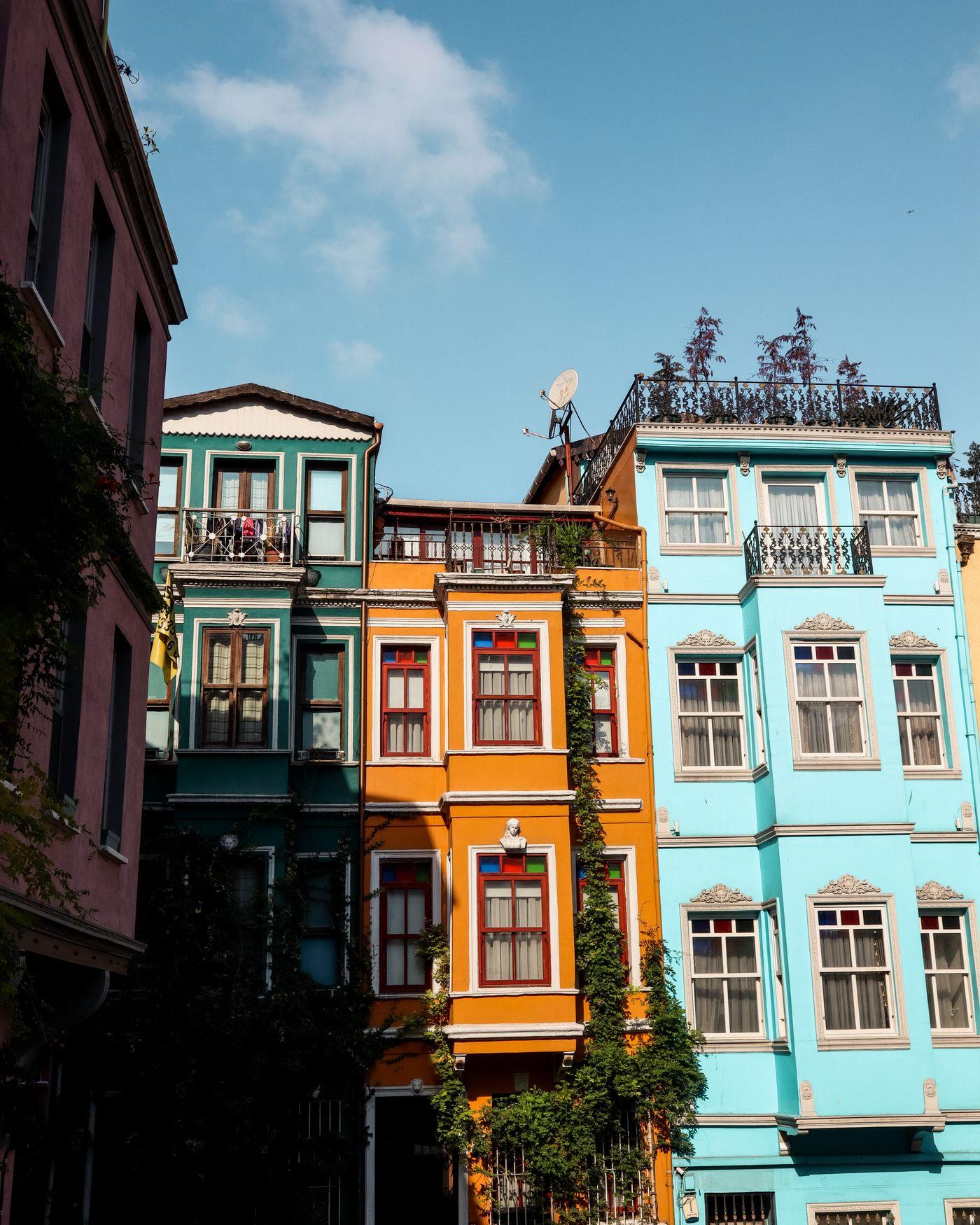
Fener and Balat sit side by side on the southern shore of the Golden Horn, a short ride from Eminönü. For centuries they were home to Istanbul's Greek Orthodox and Jewish communities, alongside Armenians and Bulgarians. Today the steep lanes of painted wooden and brick houses are among the most photographed streets in the city, and the area mixes old churches and synagogues with cafés, antique shops and everyday neighbourhood life.
The quarters are free to walk around at any time. Shops and cafés generally open from mid-morning. Allow about three hours for an unhurried loop with a coffee stop, or a full day if you add Chora or Eyüp.
A short history
Fener (the Phanar) has been the seat of the Ecumenical Patriarchate of Constantinople, the senior church of Orthodox Christianity, since 1601. Wealthy Greek families, the Phanariots, built stone mansions here, some of which still stand. Balat, just upriver, was long the city's main Jewish quarter. Sephardic Jews expelled from Spain in 1492 settled here and joined an older Greek-speaking Jewish community.
Over the 20th century most of these communities moved to other districts or left the city, and the houses fell into disrepair. Restoration since the 2000s, followed by a wave of cafés and film shoots, made Balat fashionable again, though many of its residents still live modestly in the same streets.
How to get to Balat and Fener
| Option | How | Notes |
|---|---|---|
| T5 tram | From Eminönü to the Fener or Balat stops | Runs along the Golden Horn shore road; pay with an Istanbulkart (₺46.20) |
| Ferry | Şehir Hatları Üsküdar–Haliç line (calls at Karaköy, Fener, Balat) or Kadıköy–Haliç line (calls at Fener) | Golden Horn fare ₺76.90; sailings are spaced out, so check the timetable |
| Bus | City buses from Eminönü along the shore road towards Eyüp | Frequent; get off at Fener or Balat |
| Taxi or car | From Sultanahmet, Galata or Taksim | Often 15–30 minutes depending on traffic; lanes inside Balat are narrow and steep |
A pleasant way to arrive is to visit the Spice Bazaar in the morning and take the T5 tram from Eminönü, a few minutes up the Golden Horn. Our Istanbul public transport guide explains the Istanbulkart.
Staying near Balat or the Golden Horn? See the fixed price from the airport.
A walking route through Fener and Balat
This loop starts at the Fener tram stop and ends at the Balat stop, so you can take the tram back. It involves some steep climbs on cobbles; wear comfortable shoes.
- The Ecumenical Patriarchate and the Church of St George. Behind the walls on the shore road. Inside the courtyard, the small patriarchal church glitters with gilded woodwork and icons. Its central gate has stayed closed since 1821, when Patriarch Gregory V was hanged there during the Greek War of Independence.
- The Phanar Greek Orthodox College. The huge red-brick building on the hill above, built in 1881–83 and visible from much of the Golden Horn. It is a working school, so you see it from the outside.
- The Church of St Mary of the Mongols. A small Byzantine church a short climb away, known as the only Byzantine church in the city never to have been turned into a mosque. Opening is irregular; if the gate is shut, you can still see it from the lane.
- Kiremit Caddesi and Merdivenli Yokuş. Walk west along the slope into Balat. The junction of Kiremit Caddesi with the stepped lane of Merdivenli Mektep Sokağı is where the best-known row of colourful houses stands.
- Vodina Caddesi and Leblebiciler Sokak. Down the hill, Balat's main shopping streets, with cafés, antique and vintage shops, bakeries and small restaurants.
- The Ahrida Synagogue. One of the oldest synagogues in Istanbul, with a boat-shaped wooden reader's platform. It is not open for walk-in visits; see below.
- The Bulgarian Church of St Stephen. On the shore park near the Balat stop. The whole church is made of prefabricated cast iron, cast in Vienna and shipped down the Danube, and was consecrated in 1898. It reopened in January 2018 after a long restoration.
If you have more energy, climb from Fener to the Yavuz Selim Mosque, built in the 16th century for Sultan Selim I, whose terrace looks over the Golden Horn. The Chora (Kariye) with its famous Byzantine mosaics is about a 20-minute walk uphill from Balat. See our Chora guide for its current visiting rules.
Visiting the churches and the synagogue
| Site | Entry | What to know (as of October 2026) |
|---|---|---|
| Ecumenical Patriarchate, Church of St George | Free | Open most days; guides report roughly 09:00–17:00. Bag check at the entrance; may close for services and ceremonies. |
| Bulgarian Church of St Stephen | Free, according to visitor listings | Reported open daily, roughly 09:00–17:00; not confirmed by an official source. |
| Church of St Mary of the Mongols | – | No published visiting hours; often closed outside services. |
| Ahrida Synagogue | By permission only | Requires written permission from the Chief Rabbinate of Turkey, arranged several days in advance. |
| Phanar Greek Orthodox College | Not open to visitors | View from outside. |
In the churches, dress modestly: shoulders and knees covered, and women may want a scarf. Keep your voice down, do not photograph during services, and check any photo rules at the door. Sunday mornings are taken up by the liturgy at the Patriarchate, so a weekday visit is easier if you mainly want to look around.
Cafés, food and shopping
Balat has more cafés than almost any other part of the old city, many in restored corner houses with tables on the pavement. The densest cluster is around Vodina Caddesi, Leblebiciler Sokak and the lower end of Kiremit Caddesi. You will also find small home-cooking restaurants (lokantas), bakeries, and a few old meyhanes for an evening meal.
For shopping, the antique and second-hand shops on the side streets sell old photographs, ceramics, records and furniture. Bargaining is normal for antiques, less so in cafés and bakeries.
Tips for a good visit
- Go on a weekday morning. From about 09:00 the streets are calm and the light is soft. Weekend afternoons are the busiest, with queues to photograph the best-known doorsteps.
- These are homes. Photograph the street, not through windows, and ask before photographing residents or children. Do not sit on people's steps for photos.
- Wear proper shoes. The cobbled lanes are steep and can be slippery after rain.
- Carry some cash in Turkish lira for small shops and bakeries.
- Combine it. Balat pairs well with Eyüp: take the T5 tram on to Eyüpsultan for the mosque and the cable car up to Pierre Loti hill for the view over the Golden Horn.
Getting there from the airports
Balat and Fener are about 36 km from Istanbul Airport, normally 35–55 minutes by car. A fixed-price transfer from Istanbul Airport to Eyüp and Balat is $65 in a Private Mercedes Vito or $75 in a VIP Vito; from Sabiha Gökçen it is $75 / $85. Prices are per vehicle for up to 6 passengers and up to 12 suitcases, with tolls included. Your driver waits inside arrivals with a name sign, and you pay on arrival in cash (EUR, USD or TRY). For hotels on Balat's narrow lanes, the driver stops at the nearest point a car can reach and helps with your bags.
Planning the rest of your trip? Read our guides to things to do in Istanbul, where to stay, and the Süleymaniye Mosque, another good stop on the way back towards the old city.
Book an airport transfer or a car with driver by the hour.
Istanbul VIP is operated by Regatta Turizm (TÜRSAB licence 10138). Free cancellation up to 24 hours before pickup.