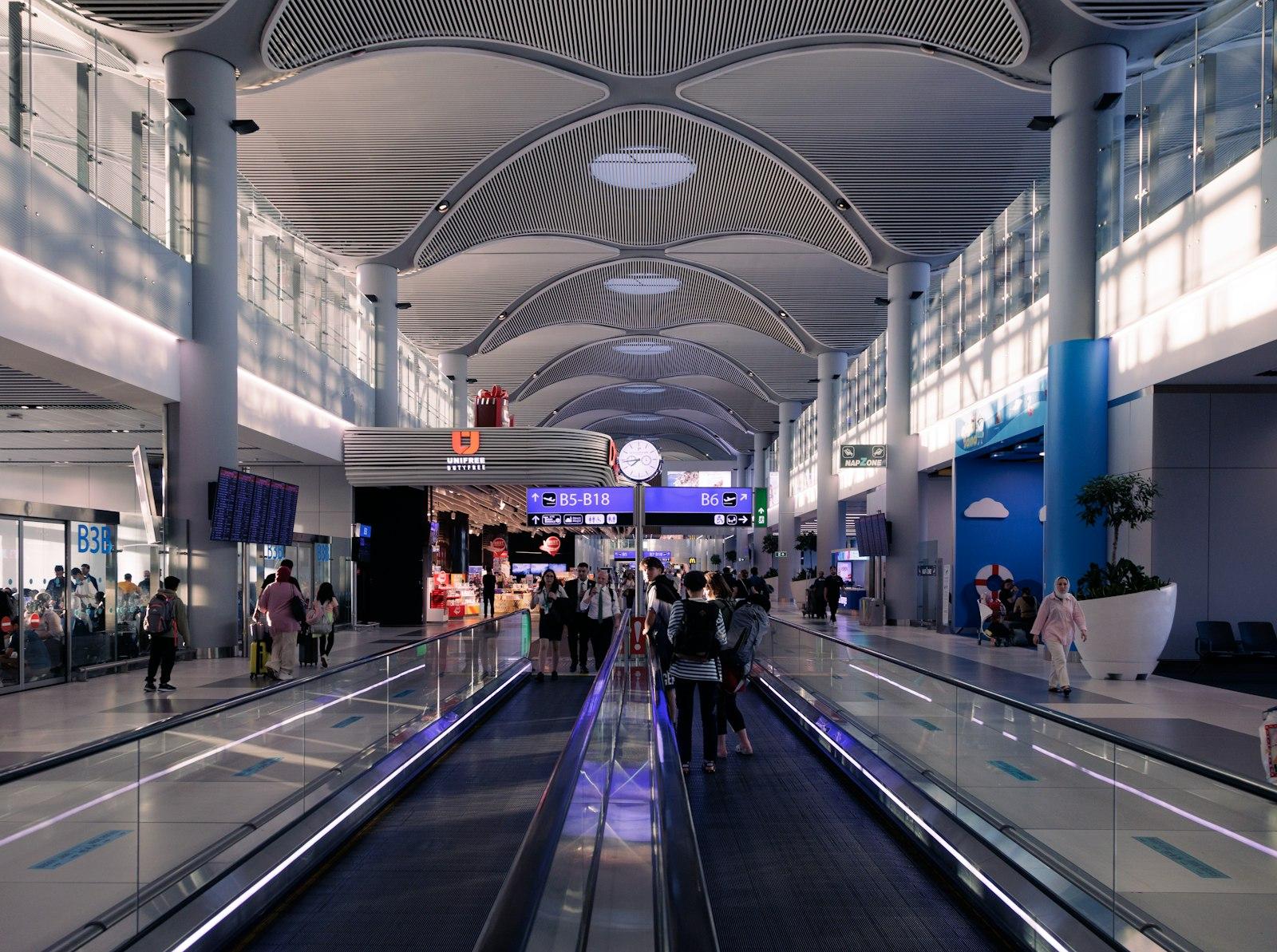
Landing at Istanbul Airport (IST) for the first time can feel daunting. It is one enormous terminal, the walk from some gates is long, and travel forums are full of the same worried questions: will I need a visa on arrival, how long is the passport queue, what if my bag is late, and how do I find my driver?
The good news is that the process is the same for every international passenger and it always runs in the same order: walk, passport control, baggage, customs, arrivals hall. This guide takes you through each step, with the details that actually matter as of October 2026.
Before you land: three checks
- Your entry document. Many nationalities can enter Türkiye visa-free for short stays; others need an e-Visa, which you must get online before you fly. There is no e-Visa kiosk or visa desk to fall back on at the airport. Our Türkiye e-Visa guide explains who needs one and how to avoid copycat websites.
- Passport validity. Türkiye's Ministry of Foreign Affairs says your passport should be valid for at least 60 days beyond the end of your stay (so 150 days for a 90-day visit) and advises at least six months from arrival.
- A way to get online. An eSIM installed at home is the quickest option, so you can message your driver or open a map the moment you land. See our eSIM and SIM card guide.
There is no paper arrival card to fill in on the plane. Keep your passport, your e-Visa (if you need one) and your hotel address to hand, and that is it.
Step 1: from the gate to passport control
Follow the signs for Arrivals / Passport Control. IST is a single terminal built for very large numbers of passengers, so depending on your gate this can be a long walk, helped by moving walkways. If your aircraft parks at a remote stand, a bus brings you to the terminal instead.
If you are connecting to another international flight, follow the Transfer signs instead: you do not go through passport control at all. If you are connecting to a domestic flight (for example to Antalya or Cappadocia), Istanbul is your point of entry, so you clear passport control here. Ask your airline whether your bags are checked through to the final airport.
Step 2: passport control
Join the queue for foreign passports (signs distinguish Turkish citizens from other nationalities). The airport lists 68 staffed passport counters and 10 e-passport control points; follow the signs and staff directions for the queue that applies to you.
At the counter, hand over your passport. If you have an e-Visa, it is linked to your passport number, but have a copy on your phone or on paper in case the officer asks for it. Officers rarely ask tourists many questions; occasionally they ask the purpose of your visit or how long you are staying. Answer simply.
Step 3: baggage claim
Check the screens for your flight's belt number. Trolleys are available in the baggage hall. This is often the longest wait of the whole process, especially after a wide-body flight.
If your bag does not appear, report it before you leave the baggage hall. Delayed bags are handled by your airline or its ground handling agent at the baggage service desks in the claim area. Keep your baggage tag and ask for a written file reference. If someone is waiting for you, send them a message; our drivers keep waiting while you file the report.
Step 4: customs
Most visitors with nothing to declare walk through the green channel. Bags are sometimes passed through an X-ray machine on the way out, and officers may stop people at random. If you are carrying goods above personal allowances, items for resale or a large amount of cash, use the red channel and check the Turkish customs rules before you travel, as the figures quoted online vary.
Step 5: the arrivals hall
You come out of customs into the public international arrivals hall, where people meeting passengers stand along the barrier. This is where private drivers wait with name signs. You will find currency exchange, ATMs, mobile operator shops and cafés here.
If you have booked with us, your driver waits inside the international arrivals hall, right after customs at the exit of the baggage area, holding a sign with your name. Our meeting point guide explains exactly what to do if you can't see them straight away.
Want someone waiting with your name when you walk out? See the fixed price for your route.
How long does it take to get through Istanbul Airport?
This is the question travellers ask most, and there is no official figure. It depends mainly on how many international flights land at the same time. As a rough guide, many passengers are through in about 30 to 60 minutes from landing, and it can take longer at peak times or when bags are slow.
| Stage | What affects it | What to expect |
|---|---|---|
| Taxiing and leaving the aircraft | Stand position; remote stand bus | Longer if you park at a remote stand |
| Walk to passport control | Gate location | Short to long; moving walkways help |
| Passport control | Number of flights landing together | Quick at quiet times, slower at peaks |
| Baggage claim | Aircraft size, ground handling | Often the longest wait |
| Customs | Random checks | Usually a short walk-through |
| Total, international arrival | All of the above | Often 30–60 minutes; longer at peaks |
Because of this, don't book anything tight on your arrival day. If you are being met, choose a transfer that tracks your flight and includes waiting time, so you don't have to hurry or message from the belt. Ours does both, at no extra charge.
Domestic arrivals and Sabiha Gökçen
If you fly into IST from another Turkish city, you arrive in the separate domestic arrivals area. There is no passport control or customs, so it is usually much quicker, but the exit is in a different place from the international one. If someone is meeting you, give them your flight number so they wait at the right door.
Landing at Sabiha Gökçen (SAW) on the Asian side? The steps are the same (passport control, baggage, customs, arrivals hall) on a smaller scale, so distances are shorter, though queues still build up at busy times. Our Sabiha Gökçen Airport guide covers that terminal in detail.
Money, SIM cards and Wi-Fi after landing
- Money. You don't need much cash at the airport if your transfer is prepaid or paid to the driver in euros or dollars. Airport exchange rates are usually weaker than in town; our money exchange guide explains where to change money and how to use ATMs without high fees.
- SIM and eSIM. Turkish operators have shops in the arrivals area. An eSIM bought before you fly saves the queue.
- Wi-Fi. The free iGA WiFi network lets you log in with an SMS code or a passport scan at a kiosk in the terminal.
Getting from the airport to your hotel
Once you are in the arrivals hall, you have four realistic choices. The Havaist airport buses, which leave from the transportation floor (-2), and the M11 metro are the cheapest. Taxis wait outside the arrivals exits; see our taxi fares guide. A pre-booked private transfer is the most predictable, with a fixed price and someone waiting for you.
| Destination | Our Private Vito | Our VIP Vito |
|---|---|---|
| IST → Sultanahmet | $70 | $80 |
| IST → Taksim | $65 | $75 |
| IST → Galata / Karaköy | $65 | $75 |
| IST → Kadıköy | $80 | $90 |
| IST → Sabiha Gökçen (SAW) | $100 | $115 |
Istanbul VIP is operated by Regatta Turizm (TÜRSAB licence 10138). There is no prepayment: you pay the driver on arrival in cash (EUR, USD or TRY), and you can cancel free of charge up to 24 hours before pickup. For route details, read Istanbul Airport to Sultanahmet or Istanbul Airport to Taksim. If you land in the middle of the night, our late-night arrival guide covers what is still running.
Questions before you fly? Message us on WhatsApp, 24/7, at +90 507 055 44 36, or book online. For everything else inside the terminal, from lounges to luggage storage, see our Istanbul Airport guide.
Fixed price, flight tracking, driver inside arrivals. Pay on arrival.